
 Tenth Indian Control Conference
9-11 December, 2024
IISER Bhopal, India
|
Tenth Indian Control Conference
9-11 December, 2024 IISER Bhopal, India |
Plenary Sessions |
|
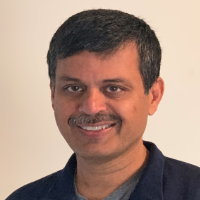
Learning and Control in Countable State Spaces
Rayadurgam Srikant, University of Illinois at Urbana-Champaign
|
|
|
|
Biography: Prof. Rayadurgam Srikant received his B.Tech. from the Indian Institute of Technology, Madras in 1985, his M.S. and Ph.D. from the University of Illinois in 1988 and 1991, respectively, all in Electrical Engineering. He was a Member of Technical Staff at AT&T Bell Laboratories from 1991 to 1995. He is currently with the University of Illinois at Urbana-Champaign, where he is the Fredric G. and Elizabeth H. Nearing Professor in the Department of Electrical and Computer Engineering, and a Professor in the Coordinated Science Lab. He is also the co-director of the C3.ai Digital Transformation Institute. He is the recipient of the 2015 INFOCOM Achievement Award and the 2019 IEEE Koji Kobayashi Computers and Communications Award, and has received several Best Paper awards including the 2015 INFOCOM Best Paper Award and the 2017 Applied Probability Society Best Publication Award. He was the Editor-in-Chief of the IEEE/ACM Transactions on Networking from 2013 to 2017. His research interests include communication networks, machine learning, and applied probability. He is a Fellow of the IEEE. |
|
|
|
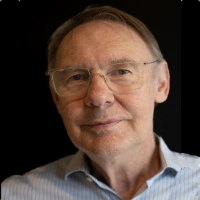
Linear Quantum Control Engineering
Ian Petersen,
Australian National University
|
|
|
|
Biography: Prof. Ian R. Petersen was born in Victoria, Australia. He received a Ph.D in Electrical Engineering in 1984 from the University of Rochester. From 1983 to 1985 he was a Postdoctoral Fellow at the Australian National University. From 2017 he has been a Professor at the Australian National University in the School of Engineering. He was the Interim Director of the School of Engineering at the Australian National University from 2018-2019. From 1985 until 2016 he was with UNSW Canberra where he was a Scientia Professor and an Australian Research Council Laureate Fellow in the School of Engineering and Information Technology. He has previously been ARC Executive Director for Mathematics Information and Communications, Acting Deputy Vice-Chancellor Research for UNSW and an Australian Federation Fellow. He has served as an Associate Editor for the IEEE Transactions on Automatic Control, Systems and Control Letters, Automatica, IEEE Transactions on Control Systems Technology and SIAM Journal on Control and Optimization. He also served as an Editor for Automatica. He is a fellow of IFAC, the Asian Control Association, the IEEE and the Australian Academy of Science. His main research interests are in robust control theory, quantum control theory and stochastic control theory. |
|
|
|
Machine Learning Applications in Biology
Sanghamitra Bandyopadhyay,
Indian Statistical Institute, Kolkata
|
|
|
|
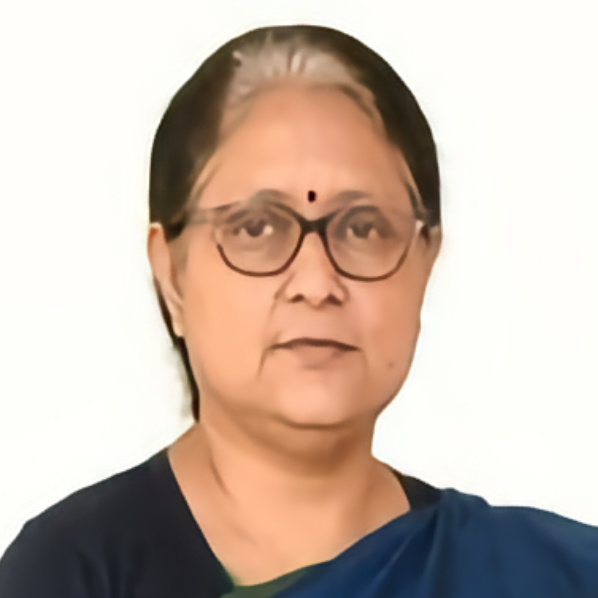
Biography: Prof. Sanghamitra Bandyopadhyay did her B Tech, M Tech and Ph. D. in Computer Science from Calcutta University, IIT Kharagpur and Indian Statistical Institute, respectively. She then joined the Indian Statistical Institute as a faculty member, and became the Director in 2015. Since 2020, she is continuing her second tenure as the Director of the Institute. Her research interests include computational biology, soft and evolutionary computation, artificial intelligence and machine learning. She has authored/co-authored several books and numerous articles in journals, book chapters, and conference proceedings and has a citation h-index of 62. Prof. Bandyopadhyay has worked in many Institutes and Universities worldwide. She is the recipient of several awards including the Shanti Swarup Bhatnagar Prize in Engineering Science, TWAS Prize, Infosys Prize, JC Bose Fellowship, Swarnajayanti fellowship, INAE Silver Jubilee award, INAE Woman Engineer of the Year award (academia), IIT Kharagpur Distinguished Alumni Award, Humboldt Fellowship from Germany, Senior Associateship of ICTP, Italy, young engineer/scientist awards from INSA, INAE and ISCA, and Dr. Shanker Dayal Sharma Gold Medal and Institute Silver from IIT, Kharagpur, India. She is a Fellow of all the Science Academies and the Engineering Academy of India, IEEE, The World Academy of Sciences (TWAS), and International Association for Pattern Recognition (IAPR). She serves as a member of the Science, Technology and Innovation Advisory Council of the Prime Minister of India (PM-STIAC). In 2022, she was conferred the Padma Shri award of the Government of India. |
 Abstract:
We will consider policy optimization methods in reinforcement learning where the state space is countably infinite. The motivation arises from control problems in communication networks and matching markets. Specifically, we consider the popular Natural Policy Gradient (NPG) algorithm, which has been studied in the past only under the assumptions that the cost is bounded and the state space is finite, neither of which holds for the aforementioned control problems. Assuming a Lyapunov drift condition, which is naturally satisfied in some cases and can be satisfied in other cases at a small cost in performance, we design a state-dependent step-size rule which dramatically improves the performance of NPG for our intended applications. In addition to experimentally verifying the performance improvement, we also theoretically show that the iteration complexity of NPG can be made independent of the size of the state space. The key analytical tool we use is the connection between NPG stepsizes and the solution to Poisson’s equation. In particular, we provide policy-independent bounds on the solution to Poisson’s equation, which are then used to guide the choice of NPG stepsizes.
 Abstract:
This lecture will present a collection of results in the area of linear quantum control engineering. It will discuss models for quantum systems using the Heisenberg pictures of quantum mechanics to describe continuous linear quantum systems. It will discuss closed loop approaches to quantum control involving coherent quantum feedback control in which the controller is also a quantum system. It will discuss quantum H - infinity control, quantum LQG control, coherent quantum observers and coherent quantum state estimation. The lecture will also cover the quantum Kalman decomposition as well as recent results on quantum risk sensitive control and networks of quantum linear systems as quantum memories. Applications in the areas of quantum optics and quantum electromechanical systems will also be presented.
 Abstract:
Machine Learning (ML) algorithms are finding extensive applications in all domains of scientific research, in particular in diverse areas of biology for making novel discoveries and for gaining deeper insights into various processes of life. In this talk we will first present brief overviews of artificial intelligence, machine learning and molecular biology. In particular, a quick introduction to the central dogma of molecular biology will be provided, which is fundamental to the understanding of a large class of machine learning applications in biology. Various kinds of molecular biology data sets will be mentioned. We will then discuss some case studies, namely, molecular target prediction, a graph theoretic method for biomarker identification and graph-based approaches in drug interaction studies. The talk will conclude with a mention of some issues and challenges in this area.